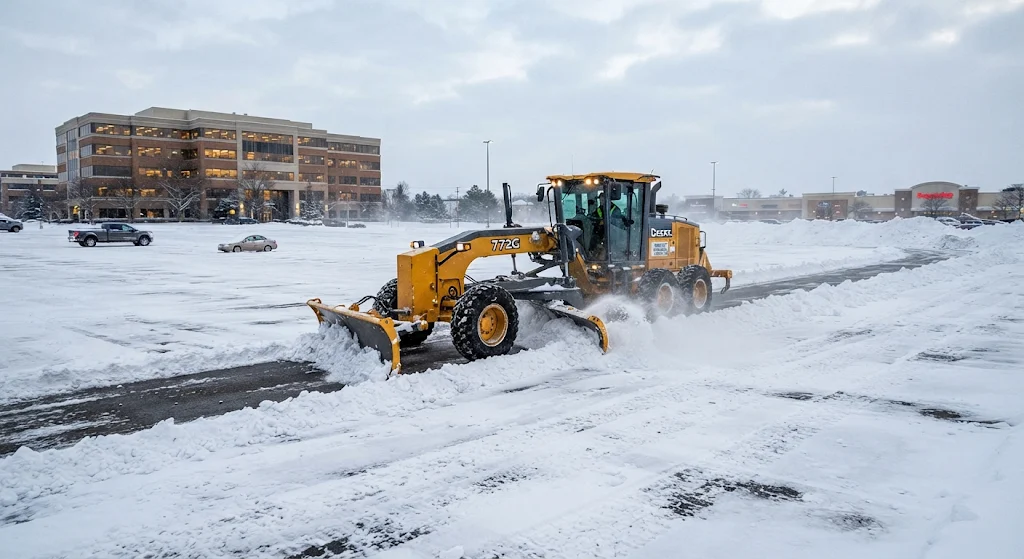
Mechanical snow clearing turns winter maintenance into a planned operation rather than a race against accumulating snow. Across large outdoor surfaces, the right combination of plows, loaders, snow blowers, and surface-treatment equipment helps keep vehicle routes and pedestrian areas accessible while reducing disruption to daily operations. Choosing machinery depends on more than the size of a property.
Equipment Choices for Large Outdoor Surfaces
A useful fleet assigns each machine a clear role. Heavy-duty equipment handles high-volume movement, while smaller machines reach areas where large vehicles cannot maneuver safely.
Plow Trucks and Wheel Loaders for High-Volume Clearing
Plow trucks form the backbone of many snow plowing operations. Straight blades move snow into windrows, while V-plows can change configuration to push, split, or carry snow across broad lots. Wheel loaders add capacity for stacking snow in designated areas or loading it for removal when storage space is limited.
The choice between them depends on the work pattern: trucks cover long routes quickly, while loaders are better suited to concentrated piles and repeated material handling. Combining both can keep traffic lanes open without leaving snowbanks unmanaged.
Skid Steers for Complex Property Layouts
Skid steers provide maneuverability around loading docks, parking islands, and building entrances. Quick-change attachments, including buckets and pusher boxes, let operators adapt to different conditions without moving a larger machine into tight spaces.
This compact equipment is most effective as part of a wider plan, not as a substitute for high-capacity machines on expansive pavement. Its value lies in reaching the places that larger vehicles cannot clear efficiently.
Surface-Specific Snow Removal Methods
Once main vehicle routes are passable, the focus shifts to accurate placement and safe access. Different surfaces call for distinct tools and operating techniques.
Snow Blowers for Controlled Placement
Commercial snow blowers can move snow beyond the edge of a cleared area, which is useful when piles would obstruct sightlines, entrances, or parking spaces. Adjustable chutes help direct snow toward approved storage zones, and powerful machines can process dense or wet accumulation that is difficult to push cleanly.
Blowers are particularly helpful for finishing work and areas where landscaping or signs make broad plowing less precise. Operators should direct discharge away from people, vehicles, and building openings.
Sidewalk Machines for Pedestrian Access
Walk-behind blowers, sidewalk tractors, and compact plows help maintain routes around entrances and across larger campuses. Their smaller footprint supports access on paths that trucks cannot use, while brushes can help clear residual snow from suitable surfaces.
Maintaining sidewalks alongside vehicle areas reduces the risk of leaving a property technically open to traffic but difficult to navigate on foot.
| Equipment | Best-Suited Task | Operational Consideration |
|---|---|---|
| Plow truck | Moving snow across broad lots and access roads | Plan windrows and snow-storage locations in advance |
| Wheel loader | Stacking or loading substantial snow volumes | Allow room for safe turning and pile management |
| Skid steer | Clearing confined or complex areas | Match the attachment to the surface and snow depth |
| Commercial snow blower | Controlled snow placement and finishing | Direct discharge away from people and property |
Operational Planning for Winter Maintenance
Machinery performs best when deployment is guided by site conditions and clear priorities. A property plan should identify entrances, emergency access, pedestrian routes, drainage points, and safe snow-storage areas before a storm begins.
De-Icing and Ice Management
Mechanical clearing removes snow, but it does not always prevent slick surfaces. Pre-treatment with suitable liquid de-icing solutions can limit ice bonding, while spreaders apply granular materials across larger areas or around high-traffic entrances. Application rates should reflect pavement temperature, precipitation, and product guidance rather than relying on a uniform setting everywhere.
Coordinating treatment with plowing helps avoid wasting material beneath snow that will soon be moved. It also supports more consistent traction across parking lots and walkways.
Service Coordination and Equipment Checks
Before winter operations, teams can confirm routes, attachment compatibility, lighting, and communication procedures. GPS tracking and time-stamped records may help document where equipment worked, while weather and surface data can inform treatment decisions.
A practical pre-storm checklist keeps the operation focused:
- Confirm priority routes, pedestrian access, and emergency lanes.
- Mark snow-storage zones and areas with obstacles or limited clearance.
- Inspect plows, blowers, spreaders, lights, and safety equipment.
- Set procedures for monitoring conditions and recording completed work.
Effective mechanical snow clearing combines the right machines with a site-specific sequence: open essential routes, manage snow piles, clear pedestrian areas, and address residual ice. For complex properties or recurring winter hazards, a qualified snow professional can assess the site and recommend an appropriate operational plan.