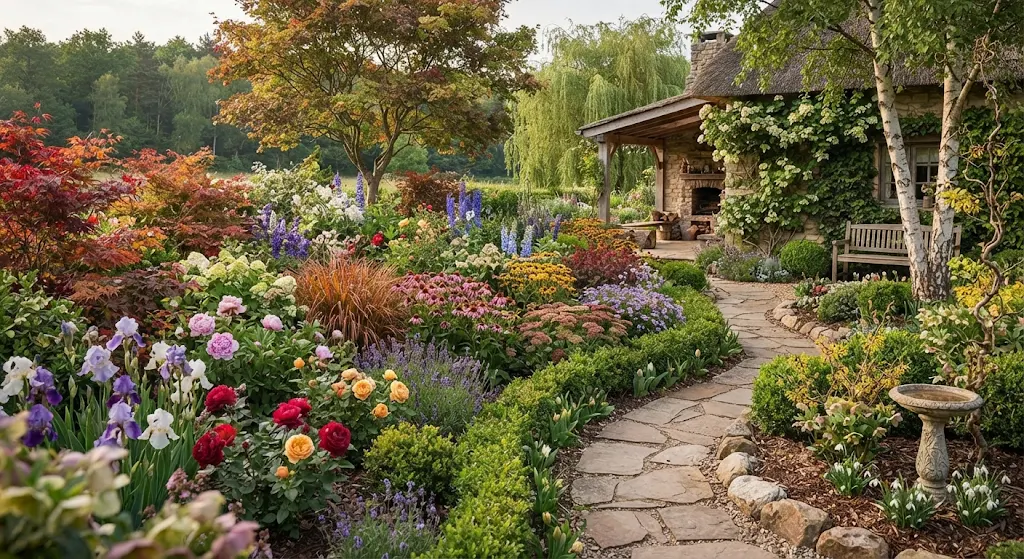
🌱 Seasonal Planting Principles for Year-Round Interest
Begin with the garden’s lasting framework: trees, shrubs, evergreen forms, paths, walls, and other features that remain visible when perennials retreat. 🌳 This backbone gives planting beds shape in winter and a calm setting for seasonal color during the growing months.
Then map the transitions. 📅 A flowering calendar helps reveal quiet stretches between major displays, while succession planting overlaps early, middle, and late performers. The result is not constant spectacle, but a steady handover from one source of interest to another. 🌼
Before choosing plants, note which areas are seen from windows, paths, or seating. 👀 Prioritizing those views helps ensure that winter bark or early flowers are placed where they can be appreciated.
🌷 Spring Bulbs and Summer Perennials in Succession
Spring begins underground. 🌱 Plant snowdrops, crocuses, daffodils, and alliums in autumn, grouping them for clear, generous patches of color. Mixing varieties with different flowering times can extend the display beyond a single brief flush. 🌸
As bulbs fade, emerging foliage carries the scene forward. 🍃 Hostas, ferns, peonies, and heucheras contribute fresh texture, while early shrubs such as magnolia and forsythia give height and a strong seasonal signal.
Summer color lasts longer when bloom periods overlap. ☀️ Salvia, nepeta, yarrow, and coneflowers can lead into asters, sedum, and ornamental grasses; removing spent flowers from suitable plants may encourage another flush. Foliage also matters: variegated or richly colored leaves keep beds visually composed between blooms. 🌺
🍂 Autumn Foliage and Winter Evergreens
Autumn is a transformation, not a closing curtain. 🍁 Select trees and shrubs for dependable fall color, then layer in late-flowering asters, ornamental grasses, and plants with berries. Seed heads from coneflowers and grasses add sculptural detail and food for wildlife after flowering ends. 🐦
In winter, evergreens anchor the view, but variety prevents a monotonous wall of green. 🌲 Combine different shapes, shades, and textures with shrubs valued for colorful stems or distinctive bark, such as red-twig dogwood and paperbark maple. Where the climate allows, witch hazel and hellebores can bring flowers into the colder months. ❄️
Use the following seasonal guide as a starting point, adjusting choices to local climate, soil, and light conditions.
|
Season |
Planting Interest |
Design Role |
|---|---|---|
|
🌸 Spring |
Snowdrops, daffodils, magnolia |
Early color and fresh growth |
|
☀️ Summer |
Salvia, coneflowers, yarrow |
Long-lasting flowers and pollinator forage |
|
🍁 Autumn |
Asters, grasses, berrying shrubs |
Foliage, fruit, and persistent seed heads |
|
❄️ Winter |
Evergreens, red-twig dogwood, witch hazel |
Structure, bark, and cold-season color |
🏡 Garden Structure That Holds Each Season Together
Paths, trellises, fences, stone walls, and seating provide order even when plants are dormant. 🌿 A simple arbor can frame a view throughout the year, while a pond or water feature adds movement and reflection when flowers are scarce. 💧 These permanent elements make seasonal change feel intentional rather than disorderly.
Choose structural features in proportion to the space, and leave convenient access for pruning, watering, and other care. 🛠️ In exposed gardens, a hedge or carefully placed screen can also shelter delicate planting from wind.
For a practical first plan, identify gaps in the garden before buying plants. 🔎 These questions help turn observation into a manageable planting scheme:
-
🌼 Which month has the least visible color or texture?
-
🌲 Where would evergreen structure improve the winter view?
-
🌸 Which flowering periods need overlap to avoid a long pause?
-
🌱 Are selected plants suited to local soil, light, and moisture?
✂️ Maintenance Timing for Continuous Seasonal Color
Well-timed care protects the display already in place. 🌿 Spring-flowering shrubs such as lilac generally benefit from pruning soon after they bloom, because late-winter cuts may remove developing flower buds. Summer-flowering shrubs often tolerate pruning before new growth begins, though the correct timing depends on the species.
In autumn, remove diseased foliage, but leave healthy grasses and sturdy perennial stems standing when they provide winter texture or habitat. 🍂 Apply mulch after the soil cools, keeping it clear of trunks and plant crowns; this helps moderate moisture and temperature changes without smothering growth.
Track what performs well and where the garden falls quiet. 📝 A simple flowering calendar, paired with notes on local conditions, makes future adjustments more precise. For plant choices or pruning questions specific to a site, consult a qualified professional or local extension service. 🌳