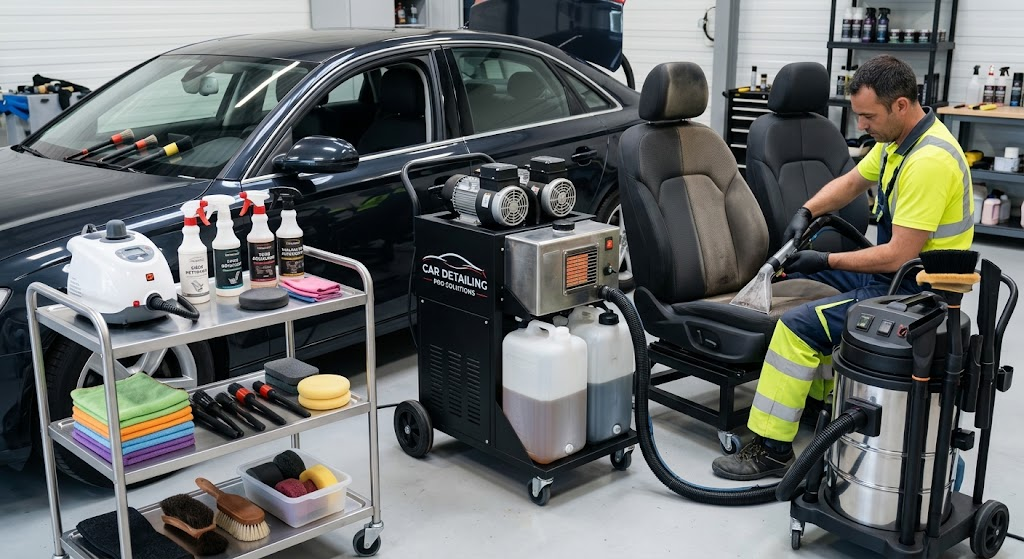
A clean vehicle cabin depends on more than a bottle of spray and a cloth. Seats, carpets, and dashboards are made from different materials, so effective interior care pairs the right equipment with a method that lifts soil without spreading it or damaging delicate finishes. Understanding what each tool does is the first step toward a cleaner cabin and better-preserved materials.
Equipment for Cleaning Car Seats, Carpets, and Dashboards
Start with dry soil before applying liquids. A car detailing vacuum with narrow attachments removes crumbs and dust from seat seams, floor mats, and the gaps around the console, reducing the risk of turning loose dirt into mud during wet cleaning.
For tight spaces, interior cleaning brushes loosen dust from vents, stitching, and textured trim. Choose soft bristles for delicate surfaces, and use separate microfiber towels for glass, plastics, and upholstery to prevent cleaner residue from transferring between materials.
| Surface | Useful Equipment | Care Consideration |
|---|---|---|
| Fabric seats and carpets | Upholstery cleaner, carpet extractor | Use controlled moisture and allow complete drying. |
| Leather seats | Soft brush, microfiber towels, leather conditioner | Use products formulated for automotive leather. |
| Dashboard and trim | Dashboard cleaner, soft detailing brush | Apply product to a cloth, not directly to screens. |
| Glass and displays | Dedicated glass cloth and ammonia-free cleaner | Avoid excess liquid around electronic controls. |
Methods for Fabric Seats and Carpet Care
Fabric absorbs spills and body oils, so a gradual approach is safer than soaking the material. Test an upholstery cleaner on an inconspicuous area, follow its label, and blot or agitate gently rather than scrubbing aggressively.
For widespread soil, a carpet extractor sprays cleaning solution and recovers it along with loosened dirt. Use only enough liquid to treat the fibers, make additional dry passes where possible, and ventilate the cabin until seats and carpeting are fully dry; lingering dampness can encourage unpleasant odors.
A steam cleaner can help with certain hard, heat-resistant surfaces, but it is not suitable for every fabric, adhesive, screen, or leather finish. Check vehicle and tool guidance first, and keep steam away from sensitive electronics and areas where heat may affect trim.
Techniques for Leather Seats and Dashboards
Leather benefits from gentle cleaning rather than heavy saturation. Work in small sections with a compatible leather cleaner and a soft brush, then wipe away residue with a clean microfiber towel; after cleaning, apply leather conditioner only when the product and leather manufacturer recommend it.
For dashboards, use a suitable dashboard cleaner on a cloth to control application and avoid streaks. A lightly dampened brush can dislodge dust from seams and vents, while screens should be cleaned with a product specifically approved for electronic displays.
Before beginning, organize equipment by task. This simple sequence helps prevent cross-contamination and makes the process more consistent:
- Vacuum loose debris from seats, carpets, and crevices before using liquid cleaners.
- Clean glass and screens with dedicated cloths to avoid greasy residue.
- Treat fabric and leather with products formulated for their respective materials.
- Finish by checking for damp areas and allowing the cabin to dry with good ventilation.
A compact interior detailing kit can cover routine maintenance, while deeper stains may call for dedicated car seat cleaning equipment. For difficult contamination or delicate finishes, professional auto detailing services can provide specialized tools and material-specific care.
Selection Criteria for Interior Detailing Tools
Choose equipment according to the materials and condition of the cabin, not the size of a kit. A vacuum and soft brushes serve frequent upkeep; an extractor is more useful for recurring fabric stains, while leather care products should match the seat finish.
Check tool instructions and product labels before use, especially when combining cleaners with heat or extraction. A measured approach protects finishes and avoids unnecessary residue, and specialist interior detailing guidance can help when a surface requires treatment beyond routine cleaning.