Exterior car detailing requires specialized tools to remove dirt, address surface contaminants, and maintain the appearance of paintwork and wheels. Using the appropriate equipment helps reduce the risk of scratches, preserve exterior finishes, and improve cleaning efficiency. From microfiber towels to wheel brushes and paint decontamination tools, each item serves a specific purpose in a professional detailing process. Understanding these tools helps identify the equipment needed for thorough and controlled vehicle care.
1. Washing Tools for Exterior Paintwork
Paintwork requires careful cleaning because abrasive particles trapped between a washing tool and the surface can leave swirl marks or fine scratches. Professional detailers therefore rely on equipment designed to lift and remove contamination while limiting unnecessary friction.
Common washing tools include:
-
Microfiber wash mitts: Their soft fibers help collect dirt while reducing direct friction against the paint when used correctly.
-
Automotive wash buckets: Separate buckets can help keep rinsing water apart from the cleaning solution, reducing the transfer of contaminants back onto the vehicle.
-
Grit guards: These inserts help retain some particles at the bottom of a bucket, limiting their reintroduction into the wash mitt.
-
Foam cannons and foam sprayers: Connected to compatible pressure washers or other equipment, they distribute cleaning solutions across exterior surfaces to loosen and soften dirt before contact washing.
-
Microfiber drying towels: These towels absorb water and help reduce water spots when used on a properly cleaned surface.
The condition of these tools matters as much as their design. Mitts and towels should be washed regularly, inspected for trapped debris, and stored away from contaminated materials. Separate equipment for heavily soiled areas helps prevent grit from being transferred to delicate painted panels.
2. Paint Decontamination and Polishing Equipment
Washing removes ordinary surface dirt, but some contaminants remain bonded to the paint. Road tar, industrial fallout, and embedded particles may require additional treatment before polishing or applying protective products.
Detailers may use several specialized tools:
-
Clay bars and synthetic clay mitts: These tools help remove certain bonded contaminants when used with an appropriate lubricant.
-
Dual-action polishers: Their combined rotational and oscillating movement allows controlled polishing to improve gloss and reduce selected paint defects.
-
Polishing pads: Foam, microfiber, and other pad materials provide different levels of cutting and finishing performance.
-
Paint inspection lights: Focused lighting reveals swirl marks, haze, and other imperfections that may be difficult to see under ordinary lighting.
-
Paint thickness gauges: These devices help measure coating thickness on compatible surfaces, providing useful information before corrective polishing.
Paint correction tools must be selected according to the paint condition and the severity of the defects. Aggressive compounds or unsuitable pads can remove excessive clear coat or leave additional marks. A test spot on an inconspicuous area helps establish an appropriate combination of polish, pad, and machine settings.
Not every vehicle needs machine polishing. When the paint is already in good condition, careful washing and the application of a suitable protective product may be sufficient.
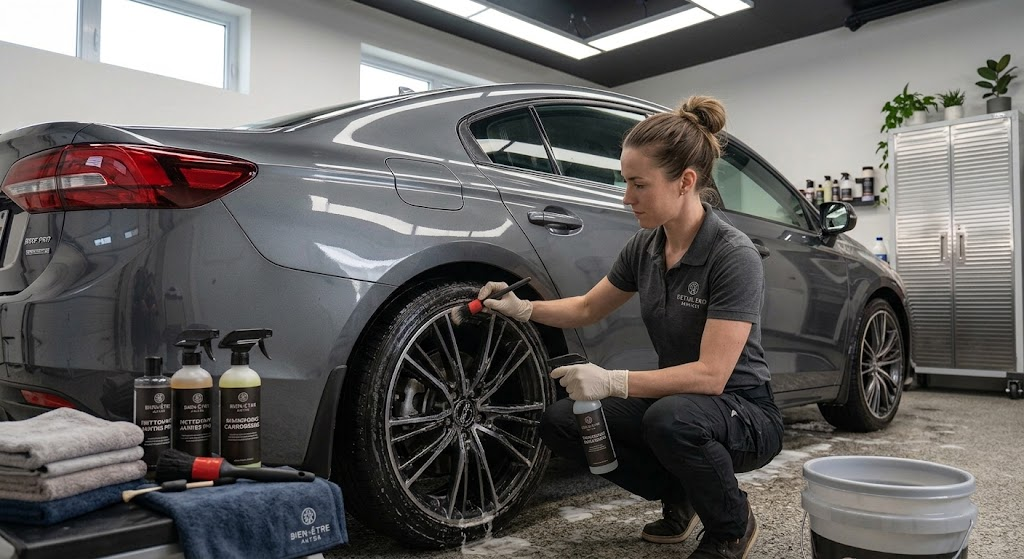
3. Brushes and Tools for Wheel Care
Wheels collect brake dust, road grime, mud, and other contaminants that may be difficult to remove with standard washing equipment. Their varied shapes and finishes also require tools that can reach narrow spaces without damaging the surface.
Useful wheel-cleaning equipment includes:
-
Soft-bristle wheel brushes: These brushes remove loose dirt from accessible surfaces while limiting abrasion when used appropriately.
-
Barrel brushes: Their elongated shape helps reach the inner sections of compatible wheel designs.
-
Detailing brushes: Smaller brushes clean lug nut recesses, emblems, and other narrow areas.
-
Dedicated tire brushes: Firmer bristles help remove accumulated grime from tire sidewalls.
-
Microfiber wheel towels: Separate towels are useful for drying and wiping wheel surfaces without transferring brake dust to the vehicle’s paint.
Wheel material determines which tools and cleaning products are suitable. Painted, polished, chrome, and coated wheels may respond differently to abrasive brushes or acidic cleaners. Manufacturer recommendations should guide product selection, and delicate finishes require particular care.
Dedicated wheel-cleaning tools should remain separate from paintwork equipment because brake dust and embedded particles can scratch exterior surfaces.
4. Pressure Washers and Drying Equipment
Pressure washers can improve the efficiency of exterior cleaning by removing loose dirt before contact washing. However, excessive pressure or an unsuitable nozzle can damage paint, trim, decals, seals, and other vulnerable components.
Important equipment considerations include:
-
Adjustable pressure settings: These allow the operator to select a suitable output for the vehicle and cleaning task.
-
Appropriate spray nozzles: The spray pattern and working distance should follow the equipment and vehicle manufacturers’ recommendations.
-
Air blowers: Automotive-safe blowers help remove water from mirrors, panel gaps, wheel openings, and other difficult-to-dry areas.
-
Drying towels: Soft, clean microfiber towels help absorb remaining moisture from exterior surfaces.
Careful drying is particularly useful around trim, badges, and recessed areas where water can remain trapped and drip onto clean panels. Equipment should also be inspected regularly for damaged hoses, loose connections, or worn components.
5. Tools for Applying Exterior Protection
After cleaning and preparing the surface, detailers may apply waxes, paint sealants, or compatible ceramic protection products. The right application tools help distribute these products evenly and reduce unnecessary residue.
Common options include foam applicator pads, microfiber applicators, and clean buffing towels. Some protective coatings require specific application materials and curing conditions, so the product instructions should always be followed.
Maintaining separate applicators for different products helps prevent cross-contamination. Clean storage also protects pads and towels from dust that could mark the finish during application.
Regular tool maintenance, proper separation of paint and wheel equipment, and careful product selection help achieve consistent results while reducing the risk of surface damage. For professional detailers, a well-maintained collection of purpose-specific tools supports efficient cleaning and preserves the vehicle’s exterior appearance over time.