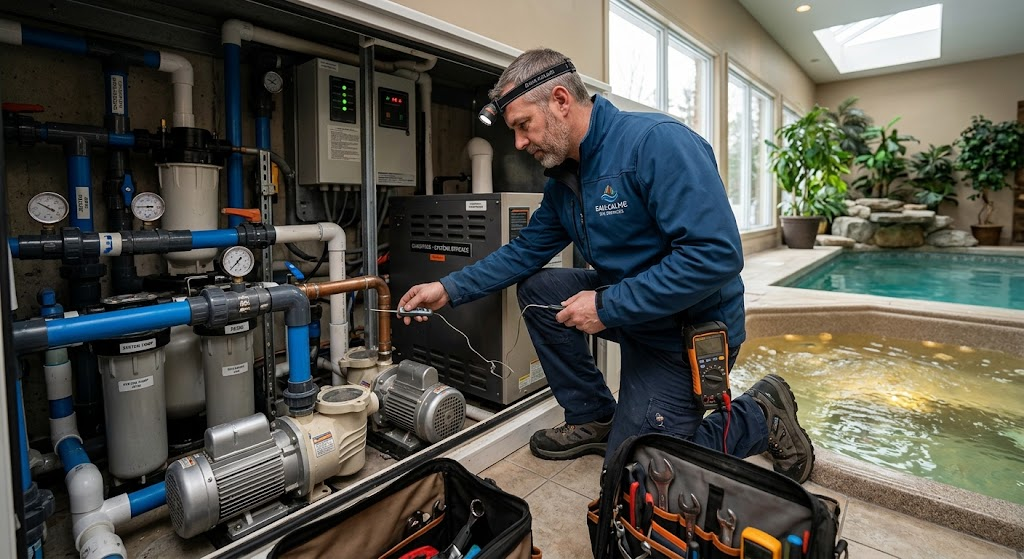
A spa relies on a properly functioning heating system and consistent water circulation to maintain comfortable temperatures and suitable water quality. When either system develops a fault, the effects can include uneven heating, reduced water flow, and increased strain on equipment. Recognizing common spa heater and circulation problems helps identify when professional servicing is necessary and prevents minor faults from developing into more extensive damage.
1. Spa Heater Problems That Affect Water Temperature
A spa heater must operate within the system’s designed temperature range to provide consistent warmth. When the water remains cold, takes longer than usual to heat, or fluctuates unexpectedly, several components may require inspection. The cause can involve the heater itself, the thermostat, sensors, or insufficient water circulation.
Common signs of heating problems include:
-
Inconsistent water temperature: Water that alternates between warm and cold may indicate a faulty temperature sensor, thermostat, or control component.
-
Slow heating: Mineral deposits, restricted circulation, or a deteriorating heating element can reduce heating performance.
-
Unexpected heater shutdowns: Safety mechanisms may interrupt heating when the system detects overheating, inadequate water flow, or another fault.
-
Error codes on the control panel: Warning messages may identify a temperature-related issue or a problem detected by the spa’s monitoring system.
These symptoms do not always point to a defective heater. For example, a circulation problem can prevent water from passing through the heating assembly at the required rate. Replacing the heater without identifying the underlying cause may therefore fail to resolve the issue.
A qualified technician can inspect the heating element, temperature sensors, thermostat, electrical connections, and control system to determine which component needs attention. Electrical testing and internal repairs should be left to trained professionals, particularly when equipment operates near water.
2. Circulation Problems That Restrict Water Flow
Water circulation distributes heat throughout the spa and helps filtration equipment remove suspended particles. When the circulation system operates inefficiently, water quality and heating performance can deteriorate together. Restricted flow may also trigger protective shutdowns that prevent the heater from operating safely.
Several warning signs can indicate circulation difficulties:
-
Weak water movement: Reduced flow from the jets or circulation outlets may indicate a clogged filter, blocked intake, or pump problem.
-
Unusual pump noises: Grinding, rattling, or persistent humming can indicate mechanical wear, an obstruction, or difficulty moving water.
-
Air trapped in the plumbing: Airlocks can interfere with water movement and prevent the pump from operating normally.
-
Cloudy or poorly filtered water: Inadequate circulation can reduce filtration effectiveness and allow contaminants to accumulate.
-
Frequent flow-related error messages: Repeated warnings may indicate a sensor issue, restricted plumbing, or insufficient circulation through the heater.
The circulation pump, filter, valves, and plumbing must work together to maintain the intended flow rate. A blockage in one section can affect the entire system, even when the other components remain functional.
Professional servicing helps identify whether the problem originates in the pump motor, impeller, filter assembly, flow sensor, or plumbing connections. Technicians can also check whether the circulation system meets the manufacturer’s operating requirements.
3. Components That Require Professional Inspection
Heating and circulation faults can share similar symptoms, making an accurate diagnosis important. A technician generally examines the components responsible for water movement, temperature regulation, and system protection.
Key inspection points include:
-
Filters and intake fittings: Accumulated debris or scale can restrict the volume of water entering the circulation system.
-
Circulation pumps: Worn components, damaged seals, or motor faults can reduce performance and create abnormal noises.
-
Heating assemblies: Corrosion, mineral buildup, or damaged heating elements can interfere with heat transfer.
-
Sensors and control boards: Incorrect readings or electrical faults may cause unnecessary shutdowns or inaccurate temperature displays.
-
Pipes and valves: Leaks, obstructions, and malfunctioning valves can disrupt circulation and affect system pressure.
The inspection should consider how these components interact rather than treating each symptom as an isolated fault. This approach helps technicians identify the source of the problem and determine whether cleaning, adjustment, component repair, or replacement is appropriate.
4. Warning Signs That Should Not Be Ignored
Some spa problems require prompt attention because continued operation may increase equipment damage or create safety concerns. Persistent overheating, repeated electrical trips, visible leaks near electrical components, and burning smells should never be dismissed as routine operating issues.
If an electrical fault or burning smell occurs, stop using the spa and disconnect power only if it is safe to do so. Do not open electrical compartments or attempt internal repairs without appropriate qualifications. A technician should assess the equipment before it returns to service.
Other symptoms, such as gradually reduced flow or longer heating times, may develop more slowly but still warrant inspection. Keeping track of changes in temperature, pump noise, error messages, and water clarity can help a servicing professional understand how the fault developed.
Maintaining Reliable Spa Performance
Regular maintenance helps reduce the risk of heater and circulation failures. Following the manufacturer’s recommendations for filter cleaning, water chemistry, inspections, and servicing can support efficient operation and extend equipment life.
When heating or circulation problems persist, professional servicing is preferable to replacing parts based on symptoms alone. Accurate diagnosis, timely repairs, and routine maintenance help maintain reliable water flow, consistent temperatures, and appropriate operating conditions. Addressing faults early can also limit unnecessary energy consumption and reduce the likelihood of more extensive repairs.